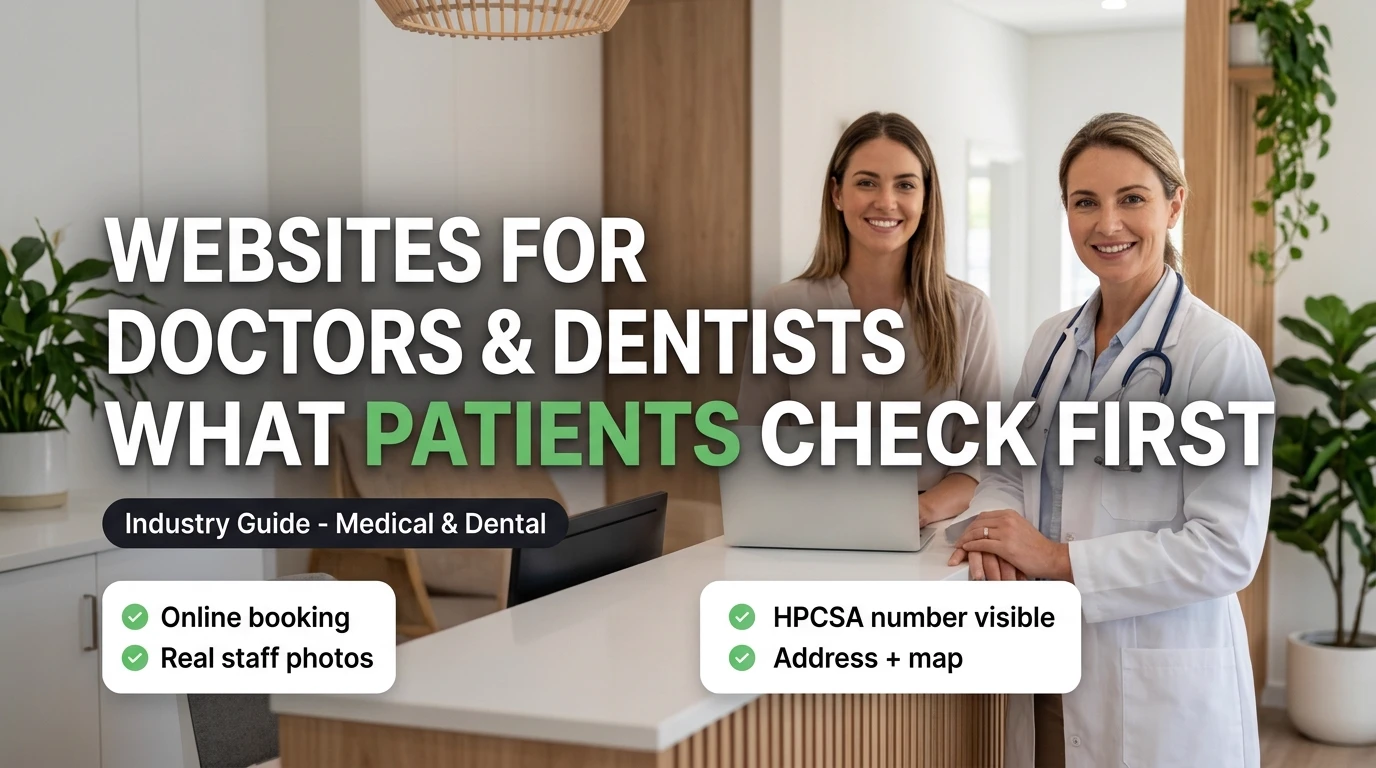
What a Patient Actually Checks Before They Book
A new patient rarely reads a medical website. They scan it, and they are running a trust check while they do. Is this a real practice with a real address I can find on a map? Is the practitioner actually registered? Can I make an appointment right now, or do I have to phone during the exact hours I am also at work? Will my medical aid be accepted? That whole assessment takes well under a minute, and if the answers are not obvious, the patient goes back to Google and clicks the next practice. Everything below is about making those answers impossible to miss.
We build and audit practice websites for GPs, dentists, physios, specialists and clinics around Centurion, Pretoria and Johannesburg, and the same gaps show up almost every time. It is seldom a design problem. It is the absence of a few specific, unglamorous elements that do nearly all of the work of turning a searcher into a booked appointment.
The Things a Medical Website Has to Get Right
Park the debate about colour palettes and hero photos for a minute. If your practice site is missing any of these, fix that first — the rest is secondary.
- A one-tap way to request an appointment. An online booking widget tied to your real diary is ideal, but even a short "request an appointment" form or a WhatsApp appointment button beats a bare phone number. Most people search for a doctor or dentist outside office hours, when nobody is there to answer the phone.
- Your HPCSA registration number, visible. Put it in the footer and on each practitioner's profile. New patients verify practitioners, and making that easy removes a doubt instead of leaving it to fester.
- Real photos of the practice and the people. Your actual reception, your consulting or treatment rooms, your named team. Patients are deciding whether they will feel comfortable walking in. A stock photo of a model in a white coat tells them nothing.
- Practitioner profiles with qualifications and special interests. "Dr Naidoo — BChD (Pretoria), 12 years in practice, special interest in children's dentistry" earns a booking. "Our team of caring professionals" does not.
- The practical details, up front. Physical address with a Google map, parking guidance, consulting hours, after-hours or emergency instructions, and which medical aids you deal with. These are the questions that otherwise become phone calls your receptionist has to field all day.
- A POPIA-compliant privacy note. Any practice collecting patient information through a form needs one. It is also a quiet trust signal that you take confidentiality seriously.
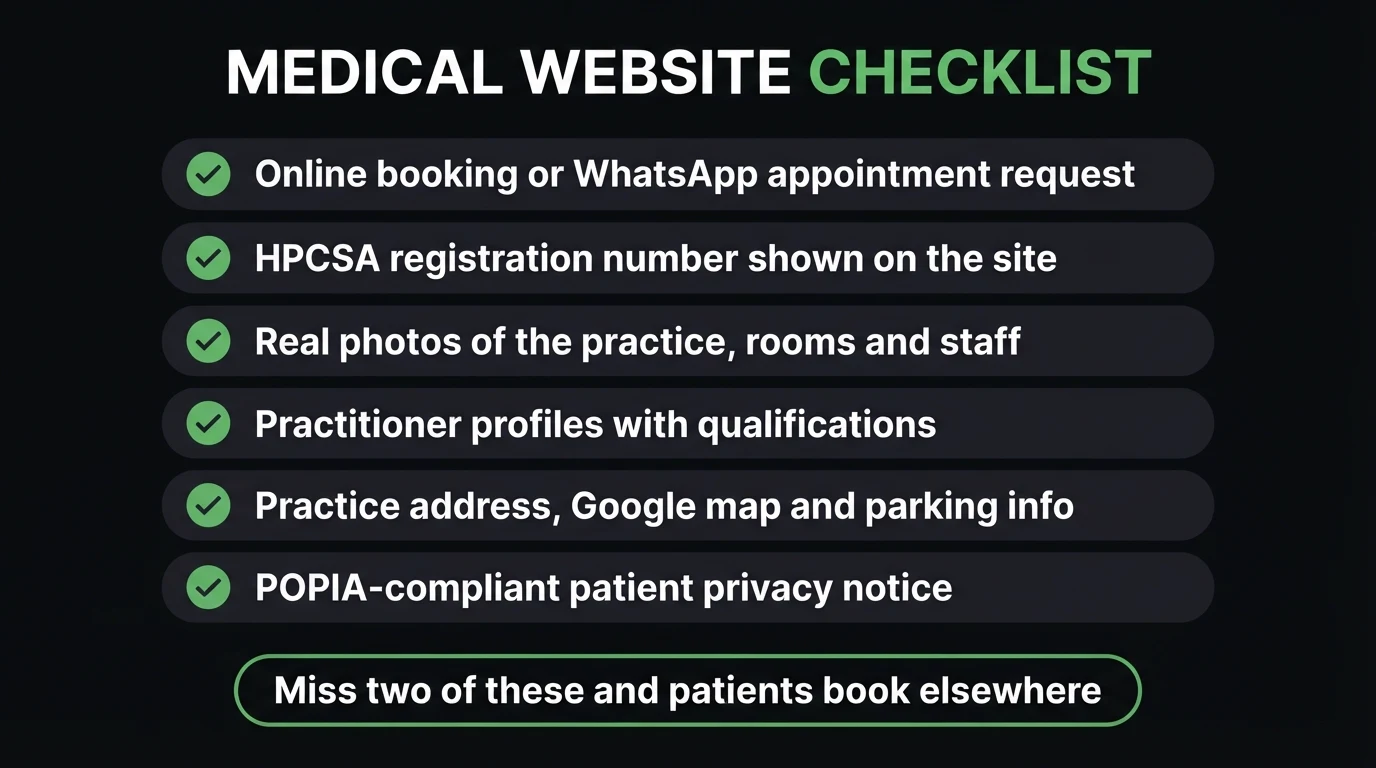
What Most Practice Websites Get Wrong
The same handful of mistakes show up on practice site after practice site, usually because the website was built to look reassuring in a brochure rather than to survive a nervous first-time patient at 9pm on a Sunday:
- Contact form only — no booking path, and the form promises a reply "in due course"
- Stock photography of models and generic clinics instead of your actual rooms and team
- No HPCSA number anywhere, and vague "our team" copy with no named practitioners
- Medical aids, hours and parking buried three clicks deep or missing entirely
- Online booking or WhatsApp appointment request, working day or night
- Real photos of reception, rooms and named team members
- HPCSA number in the footer and on every practitioner profile
- Address, map, parking, hours and medical aids visible above the fold
When we run a lead-leak check on a medical or dental site, the booking flow is nearly always the biggest gap. A practice with a healthy patient base and decent Google visibility will still be pushing every enquiry through a single "contact us" form or an unanswered after-hours phone line. The traffic is arriving; the site just is not built to catch it. Adding a proper appointment request path, moving the HPCSA number and medical aid list above the fold, and replacing stock imagery with photos of the real rooms usually does more for the enquiry rate than a full redesign would.
Quick question before you read on: how many of this week's new-patient calls were really just someone asking something your website should have already answered?
Online Booking: The Feature Most Practices Still Skip
Most practices run on a phone number and a contact form and assume that covers it. It does not. A form that says "we will get back to you" loses the moment a patient was ready to commit, and by the time your receptionist replies the next morning, a fair number have already booked with whichever practice let them lock it in overnight. A booking request path closes that gap — the patient states what they need and when, and your team starts the day with a list instead of a silence.
You do not need every service bookable online from day one. A simple "request an appointment" form that captures name, contact number, preferred practitioner and rough time, plus a WhatsApp appointment button as the fast lane, will out-convert a generic contact page comfortably. If you later want a full diary-synced booking system, that is an upgrade, not a prerequisite.
Here is how we would prioritise fixing an existing practice site, ranked by impact against effort — because not every improvement deserves the same slice of your month:
| Fix | Why it matters | Effort |
|---|---|---|
| Appointment request path | Captures intent outside office hours — the single highest-leverage fix on most practice sites | Medium |
| HPCSA number + medical aids visible | Clears the two checks a cautious new patient makes before phoning | Low |
| Real practice & team photos | Shows a nervous first-timer exactly what to expect when they walk in | Low |
| Practitioner profile pages | Lets patients pick the right person and builds confidence before the visit | Low |
| Full diary-synced booking system | Worth it once call volume is genuinely unmanageable — not before | High |
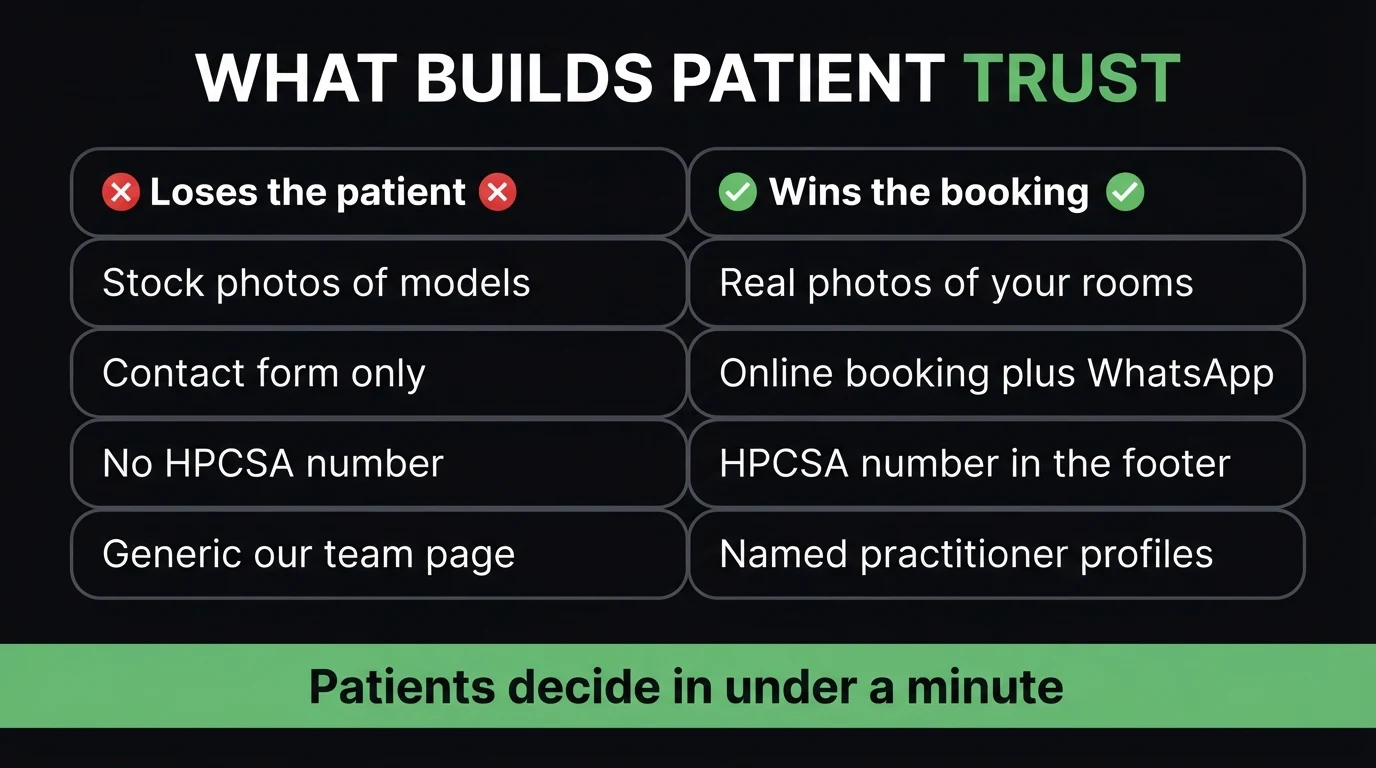
POPIA, HPCSA and the Trust Signals That Matter
Health is a high-trust purchase, so the compliance details are not box-ticking — they are conversion tools. A visible HPCSA registration number, practitioner qualifications with year of registration, and a plain-English POPIA privacy note covering how patient enquiries are stored and used all tell a cautious patient they are dealing with a properly run practice. Real imagery does the same job emotionally — this is exactly why real photos beat stock photos for trust on a health site more than almost any other industry.
One more that practices underrate: your Google Business Profile and your website need to agree. Patients often find you on Maps first, then click through to check you out. If the hours, address or phone number differ between the two, that small inconsistency reads as "something is off here". We cover how the two work together in Google Business Profile vs a Website.
Run a medical or dental practice? See a booking-ready site built for it.
Send Chris your practitioner details, services and a few photos of your rooms on WhatsApp, and see a live demo — appointment request flow, practitioner profiles, HPCSA and POPIA sections included — before you pay anything.
Zero deposit before approval · No lock-in · 48-hour free demo · From R1,200/mo
How CJX Studios Builds Medical and Dental Websites
Every practice site we build starts with the appointment path and the trust signals, not the colour scheme. That means an appointment request form and a WhatsApp appointment button by default, named practitioner profiles with qualifications, a footer HPCSA number, a POPIA privacy note, a medical-aids list, and space for real photos of your rooms — built mobile-first, because most patients will find you on a phone. If you are a practice owner or manager and your current site is quietly turning every enquiry into an after-hours voicemail, that is the first thing we would fix. Have a look at our website packages or the medical practice pages we build for Pretoria clinics to see the structure in place.
Go Deeper: Related Guides
Frequently Asked Questions
What is the most important feature on a doctor's or dentist's website?
A clear, one-tap way to request an appointment — an online booking widget or a WhatsApp appointment button that works day or night. A patient who has decided to book will not wait for office hours to fill in a contact form. If your site cannot capture that request in the moment, the next practice in the search results will.
Do I need online booking, or is a phone number and contact form enough?
A phone number is essential but not sufficient. Many patients search in the evening or over a weekend, when your rooms are closed. A booking request form or a WhatsApp appointment button lets them lock in their intent there and then, so your reception team starts Monday with a list of requests instead of a silent inbox.
Does my HPCSA number really need to be on the website?
Yes. New patients verify practitioners before they commit to a first appointment, and a visible HPCSA registration number is the fastest way to pass that check. Put it in the footer and on each practitioner profile. It costs nothing and it removes a doubt that otherwise sends a cautious patient back to Google.
Should a medical practice website use real photos of the rooms and staff?
Real photos of your reception, consulting rooms and named team members consistently outperform stock imagery for a health practice. Patients are deciding whether they will feel comfortable in your space. A stock photo of a model in a white coat tells them nothing; a photo of your actual waiting room and your actual dentist tells them what to expect.
How fast can CJX Studios build a medical or dental practice website?
The live demo is ready within 48 hours of you sending your practitioner details, services and a few photos over WhatsApp. You see the real page — booking flow, practitioner profiles, HPCSA and POPIA sections included — before paying anything. There is no deposit until you approve the demo, and plans start from R1,200 per month.
- Patients decide in under a minute: is it real, is it registered, can I book easily, will my medical aid work?
- An appointment request path beats a bare phone number, because most patients search after hours.
- HPCSA number, real photos and named practitioner profiles are cheap, fast trust wins — do those before a full rebuild.
Keep Reading

Chris Maboyi
I build websites for South African doctors, dentists, physios and clinics across Centurion, Pretoria and Gauteng — built around the appointment path and the trust signals first, everything else second. Every site starts with a 48-hour free demo: real, live, no deposit, no obligation. Get in touch or WhatsApp me directly.